 Kazakhya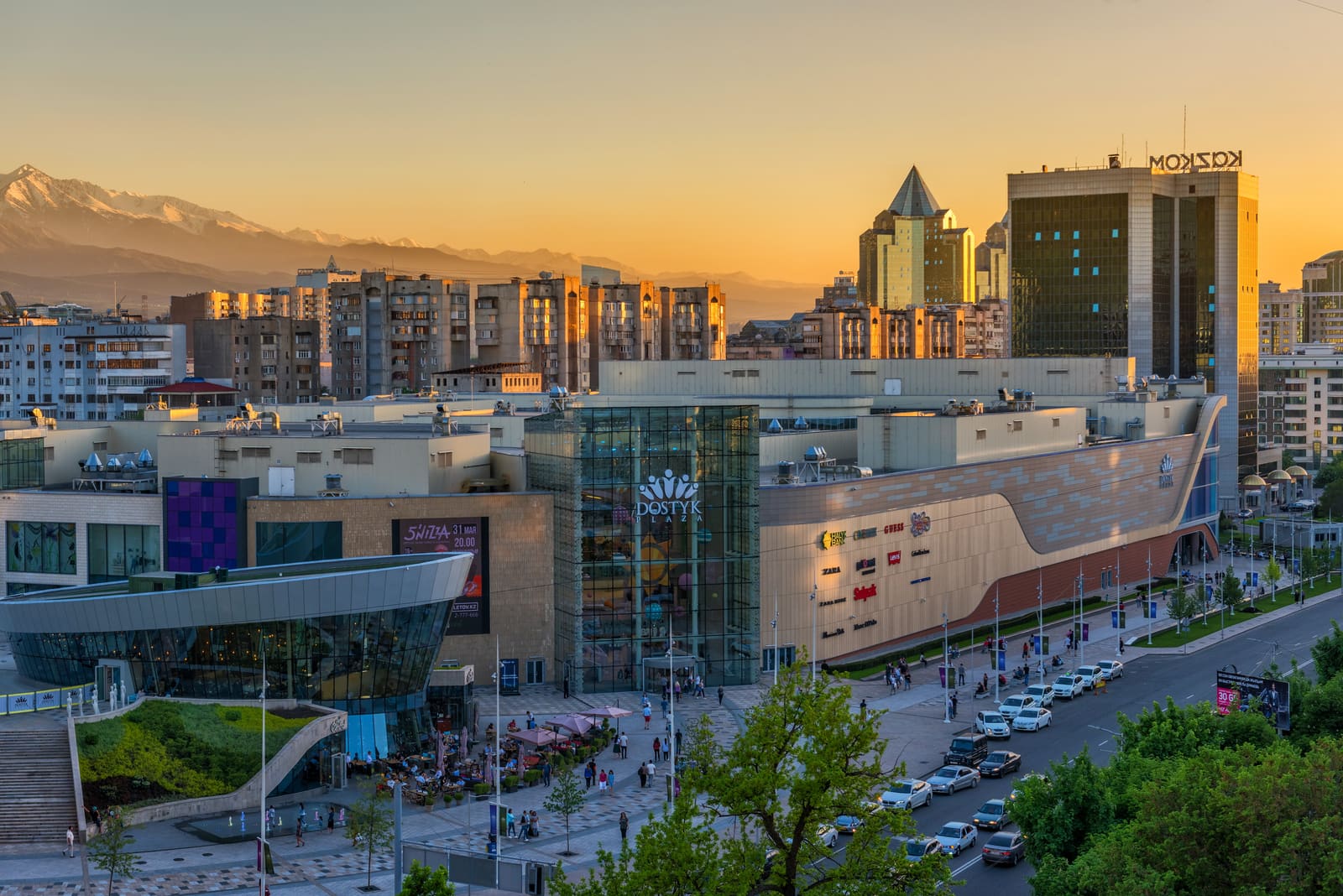
Studyin Kazakhstan
An advanced model in Central Asia combining the Soviet legacy with modern world standards, with notable progress since independence in 1991.
About education in Kazakhstan
Kazakhstan's education system is an advanced model in Central Asia, combining the Soviet legacy with modern world standards. It consists of connected stages beginning with pre-school education and ending with higher education, backed by legislation such as the Education Law (2011) and Kazakhstan joining the Bologna Process (2010).
Almaty, the most populous city and the cultural and educational centre, stands out as a key hub hosting prestigious universities such as Al-Farabi Kazakh National University (KazNU), KIMEP University, the State Medical University (AGMU), Satbayev University and the Almaty University of Power Engineering and Telecommunications (AUES), closely linked to all stages of education.
1. Pre-school education
Optional for children aged 1-6 (nursery 1-3, kindergarten 3-6), focusing on developing language skills (Kazakh, Russian, English) and social skills. Public kindergartens in Almaty offer subsidised services for symbolic fees ($10-30 per month), while private ones cost $100-300 per month with advanced programmes. UNICEF strengthens this sector through quality development, teacher training and resources, helping raise coverage to 75% by 2020, though a shortage of institutions in rural areas remains a challenge.
2. Primary education
For children aged 6-10 (grades 1-4). It is compulsory and free, focusing on languages (Kazakh, Russian, English), mathematics and basic science. In Almaty, schools offer modern facilities supporting a literacy rate of 99.8%.
3. Secondary education
Covers ages 11-18 (basic education grades 5-9, general education grades 10-11/12). It is compulsory up to grade 9, focusing on sciences (physics, chemistry), mathematics and languages, with national assessment exams. Almaty stands out for specialised schools targeting gifted students or specific professions, such as lyceums, gymnasiums, Nazarbayev schools and international schools.
4. Vocational and technical education
Begins after grade 9 or 11 (3-4 years). It is optional and trains students practically in fields such as engineering, medicine and tourism. In 2024 it enrolled 565,000 students. In Almaty, colleges offer applied programmes with state support of up to $1,900 per person per year, with 2025-2027 reforms to raise quality despite the challenge of weak links to the labour market.
5. Higher education
Has emerged as a vital driver of academic and economic progress since independence in 1991, developing markedly with the country joining the Bologna Process (2010) and passing the Education Law (2011) to train professionals in medicine, engineering and technology. A bachelor’s degree takes four years, or 5-6 years for medicine with practical training, and 7 years for some engineering specialities, followed by a master’s of 1-2 years and a doctorate of 3-5 years.
The system included more than 120 universities by 2024, with around 604,135 students enrolled in 2021 according to UNESCO, rising to about 620,000 in 2024 with growing numbers of international students from India, the Gulf and Central Asia.
ENT/UNT results (the unified national exam for secondary school graduates) admitted around 70% of applicants to universities in 2024, with state support covering 143,000 scholarships for 23% of students. Tuition ranged between $1,500 and $6,000 per year, and living costs in Almaty between $250 and $450 per month including housing and halal food.
Universities such as Al-Farabi National University, KIMEP, the State Medical University, Satbayev University and AUES hold a prominent position in Almaty, which attracted more than 25,000 international students by 2024 thanks to its diverse programmes in Kazakh, Russian and English, which expanded by 15%. KazNU tops the local rankings and has achieved advanced positions worldwide (ranked 207 in QS 2024).
About Kazakhstani universities
Kazakhstani universities were the cornerstone of building a modern higher education system after independence in 1991, flourishing through reforms such as joining the Bologna Process (2010) to strengthen research and applied disciplines. By 2024 they numbered more than 120, including 11 national and 48 private, spread across cities such as Almaty, Astana, Turkestan, Shymkent and Karaganda, with a focus on medicine, engineering and economics.
Al-Farabi Kazakh National University (KazNU)
Almaty, founded 1934Ranking: 207 worldwide (QS 2024)
Programmes: Medicine, engineering, natural sciences, economics, law
Tuition: $3,000 to $5,000 per year
Students: Over 20,000
Highlights: English-taught programmes, 300 partner universities, a 100-hectare campus
Satbayev University
Almaty, founded 1934Ranking: 501 to 550 worldwide
Programmes: Mechanical engineering, mining, IT
Tuition: $2,000 to $4,000 per year
Students: Around 10,000
Highlights: Industry partnerships and a strong applied research focus
Abai Kazakh National Pedagogical University
Almaty, founded 1928Ranking: 601 to 650 worldwide
Programmes: Education, humanities, psychology, arts
Tuition: $2,000 to $4,000 per year
Students: Around 25,000
Highlights: The country's leading teacher-training school, multilingual programmes
Kazakh-British Technical University (KBTU)
Almaty, founded 2001Ranking: 801 to 1000 worldwide
Programmes: Petroleum engineering, IT, management
Tuition: $3,500 to $6,000 per year
Students: Around 3,000
Highlights: British partnership with a strong energy focus
KIMEP University
Almaty, founded 1992Ranking: Locally accredited
Programmes: Business, economics, political science, journalism
Tuition: $4,000 to $6,000 per year
Students: Around 2,000
Highlights: American-style education taught in English
L.N. Gumilyov Eurasian National University
Astana, founded 1996Ranking: 355 worldwide
Programmes: Social sciences, engineering, languages, technology
Tuition: $2,500 to $4,500 per year
Students: Around 13,000
Highlights: Global academic exchange and multilingual programmes
Nazarbayev University
Astana, founded 2010Ranking: 501 to 510 worldwide
Programmes: Engineering, computer science, medicine, business
Tuition: $6,000 to $10,000 per year
Students: Around 6,000 from 50 countries
Highlights: English-taught, modern labs and generous scholarships
Khoja Akhmet Yassawi International Kazakh-Turkish University
Turkestan, founded 1991Ranking: 601 to 650 worldwide
Programmes: Medicine, humanities, engineering, education
Tuition: $2,000 to $4,000 per year
Students: Over 10,000
Highlights: Turkish cultural partnership on a historic site
M. Auezov South Kazakhstan State University
Shymkent, founded 1943Ranking: 701 to 750 worldwide
Programmes: Chemical engineering, agriculture, economics, education
Tuition: $1,500 to $3,500 per year
Students: Over 15,000
Highlights: Broad programmes tied to local industry
Karaganda Technical University
Karaganda, founded 1953Ranking: A local leader
Programmes: Mining engineering, mechanics, IT
Tuition: $1,800 to $3,500 per year
Students: Around 12,000
Highlights: Heavy industry focus with hands-on training
Student housing and living costs
Student housing types and prices
University dormitories
Shared rooms (2-4 students) with beds, desks, shared bathrooms and sometimes kitchens, close to the universities.
$30 - $100 per month ($30-60 at standard universities, $80-100 at modern ones such as Nazarbayev)
Private apartments
Rented furnished apartments, from one room upwards, for privacy and comfort.
$200 - $500 per month ($200-360 outside the big cities, $300-500 in central Almaty and Astana)
Shared housing
Rented rooms in apartments shared between students, splitting rent and utilities.
$100 - $200 per month ($100-150 in smaller cities such as Shymkent, $150-250 in Almaty)
Homestays
Living with local families, often with meals, for cultural adaptation.
$160 - $300 per month (sometimes including food)
The cost of living in Kazakhstan
Costs vary by city, higher in Almaty and Astana and lower in smaller cities such as Shymkent, making them an economical choice for students.
| Item | Cost |
|---|---|
| Water 500ml | $0.40 - $0.60 |
| Coffee and drinks | $1.6 - $2 |
| Popular fast food | $2.4 - $6 |
| Average restaurant meal | $6 - $10 |
| Meal at a good restaurant | $10 - $20 |
| Transport: bus | $0.30 - $0.40 |
| Taxi per ride | $2 - $5 |
| Petrol per litre | $0.40 - $0.50 |
| Internet and phone per month | $10 - $20 |
| Other expenses | $20 - $40 |
| Monthly grocery shopping | $150 - $250 |
| Bills for a small apartment | $20 - $40 |
| Clothing | T-shirt $10, jeans $30 in regular stores |
Monthly totals
Economical
Including housing, food and transport.
$200 - $300
Average
With some entertainment.
$300 - $500
Comfortable
In Almaty or Astana with a private apartment and extra activities.
$500 - $800
Admission and registration
Admission requirements for international students
International students are not required to sit the Unified National Test (UNT), which is compulsory for local students. Instead they are admitted based on their academic documents, such as a secondary school certificate or its equivalent, with a certified translation into English, Russian or Kazakh.
Some universities may require an interview or an entrance test. If the programme is in English, students need to prove language proficiency, such as IELTS or TOEFL, depending on the university's requirements. Some programmes may ask for extra documents such as recommendation letters, a motivation essay and medical certificates.
Deadlines
Deadlines vary by university and programme, but generally fall between 1 June and 25 August for most universities. Nazarbayev University has different dates, often in February or March, making it an option for students who miss the other deadlines. It is advisable to check official university websites for the latest dates, as they may change yearly.
Scholarships
Government scholarships: the Kazakhstani government scholarship is the leading option for international students, offered by the Ministry of Science and Higher Education of the Republic of Kazakhstan.
Covers tuition fees in full and provides a monthly stipend, making it a fully funded scholarship.
Open to foreign students with no distinction between nationalities, making it well suited to Arab students.
From June to July each year, with applications accepted in Kazakh, Russian or English.
May include housing support, health insurance or a monthly allowance, depending on the chosen university.
What we offer students, with comprehensive special offers
Our services are designed for international students, especially Arab students who may face language or cultural challenges. We provide tailored support with a dedicated advisor for every student, and guarantee a round-the-clock support hotline.
Application and invitation services
We help students choose the right university and programme for their academic goals and walk with them through preparing the application, including translating documents and meeting admission requirements. We also facilitate obtaining invitation letters from universities and guide students through the study visa process.
Arrival and orientation
When students arrive, we welcome them at the airport and give an orientation tour to help them settle into the new environment, including opening a bank account and information about local culture and essential facilities.
Housing arrangements
We arrange suitable housing for students, whether in dormitories or private apartments, and help complete the paperwork such as rental contracts and activating utilities.
Support throughout the study years
We provide continuous support covering academic progress, help finding internships or jobs, and support with personal or administrative challenges, including visa renewals and health insurance.
Start your study file
The Kazakhya team, from the heart of Almaty
+7 771 185 9790We accompany our students from university admission until they settle in and their families feel at ease. Almaty, Kazakhstan.